Biodentine® XP – Dentine Restoration System
See 1 review

Permanent dentine substitute for daily deep cavity restorations.

Buy now
Request a demo
Time

All-in-one, ready-to-mix cartridge

precision

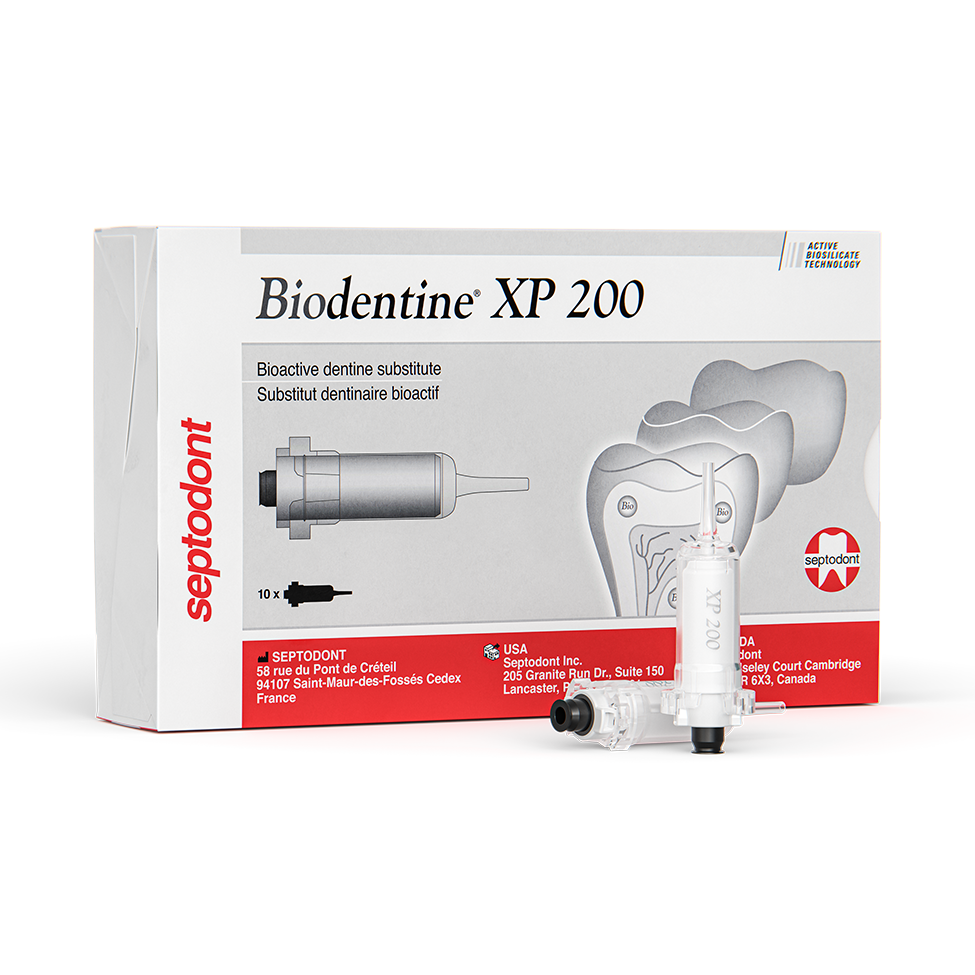
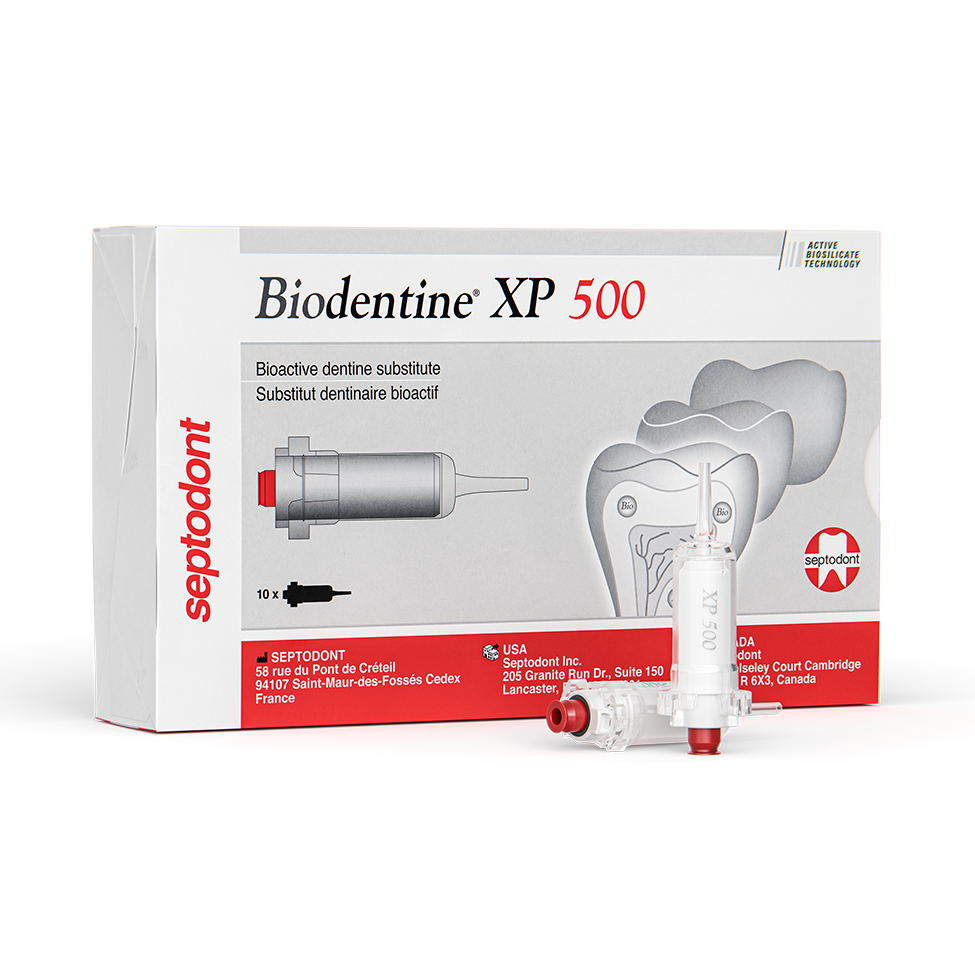
Choice of volume: XP 200 or XP 500

Lasting

Direct placement in Bio Bulk-Fill**

  • Indications

    • In the crown: Biodentine® XP is suitable for permanent dentine restoration under composites or inlay/onlay, temporary dentine-enamel restoration for up to 6 months, restoration of deep and/or large carious lesions, restoration of cervical or radicular lesions, pulp capping (direct and indirect), and pulpotomy for diagnosed symptoms of reversible or irreversible pulpitis.
    • In the root: Biodentine® XP is suitable for root and furcation perforations, internal/external resorptions, apexification, retrograde surgical filling, and revitalization procedure by means of revascularization of permanent immature teeth with necrotic pulp.
  • Features & benefits

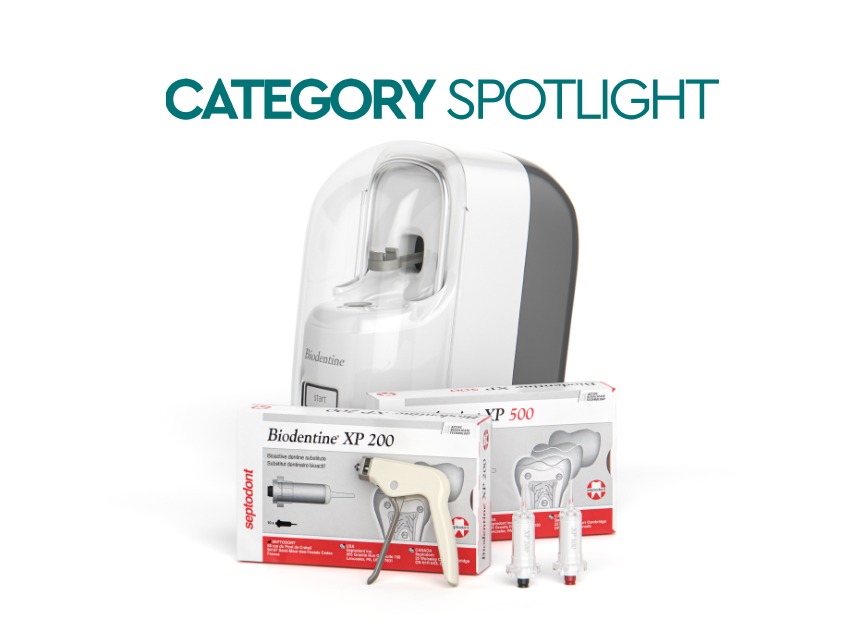
    Biodentine® is a unique combination of pulp therapeutic and restorative properties in a single product. Now, the next-generation Biodentine® XP makes dentine restoration easier than ever, from fast product preparation to direct placement in the tooth.


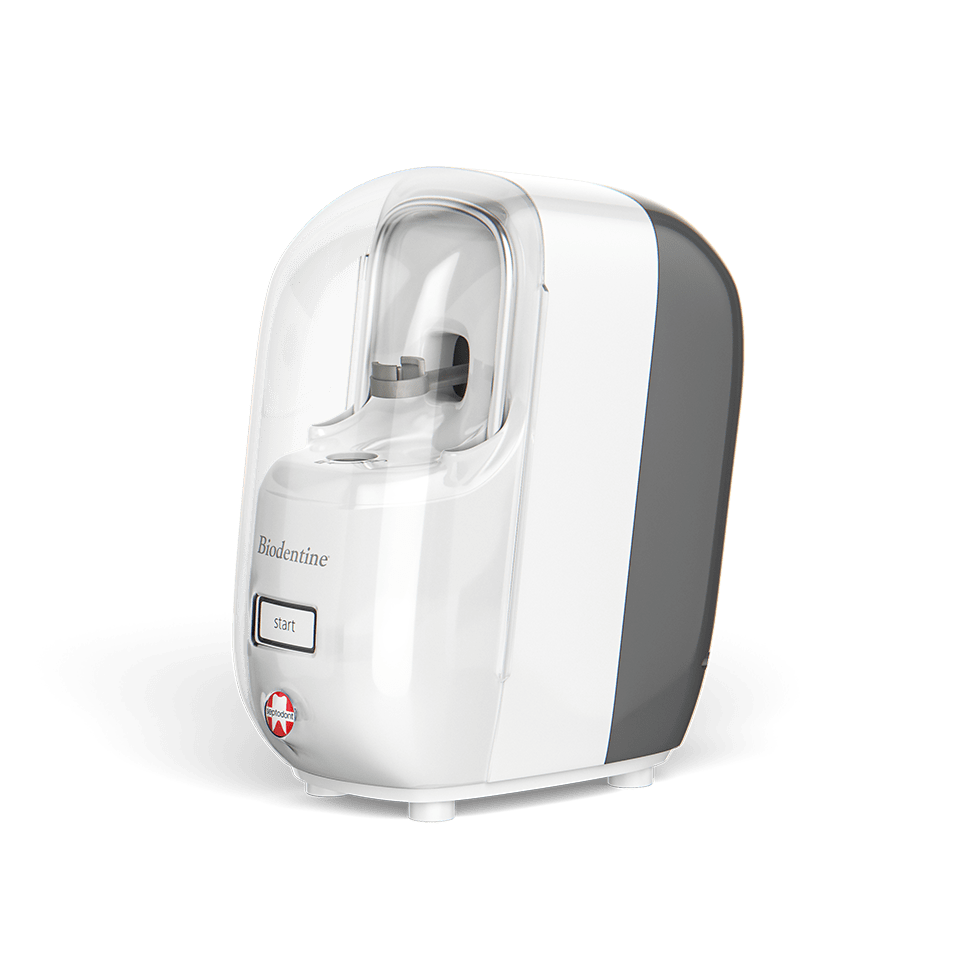
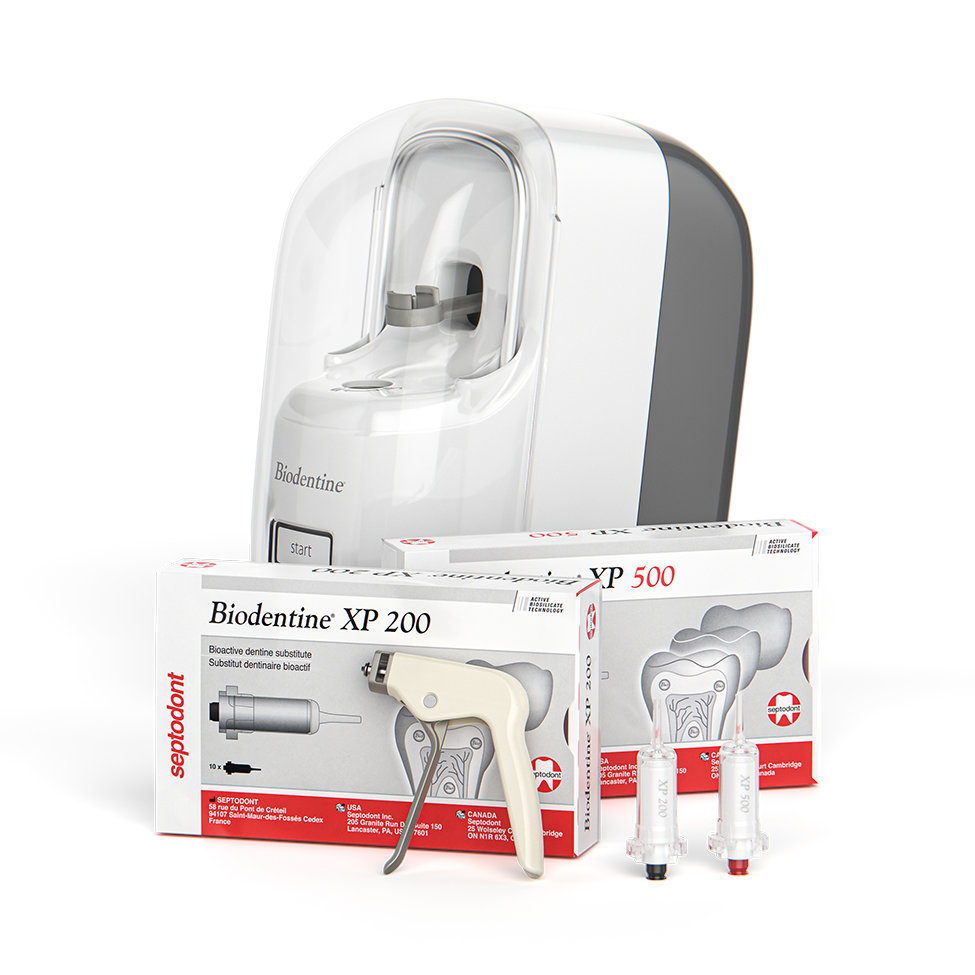
    • All-in-one cartridge: The ready-to-mix powder-liquid cartridge is mixed in 30 seconds with a single push of a button, offering fewer steps and faster procedures.
    • Adequate consistency: The patented Biodentine® XP Mixer delivers a smooth, homogenous consistency to fit physical properties in the tooth.
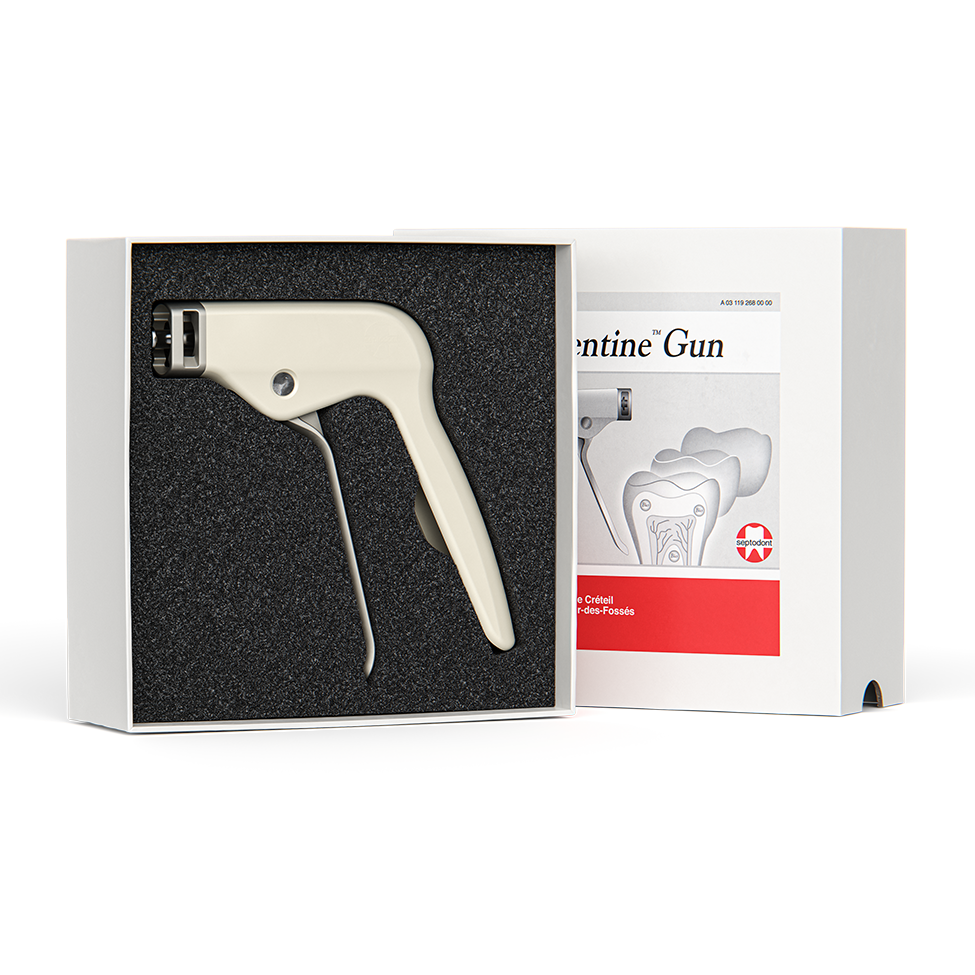
    • Direct placement: Biodentine® XP can be applied directly into the tooth from pulp to crown, thanks to the orientable nozzle and easy-use dispenser gun.
    • Choice of volume: With a choice of XP 200 and XP 500 cartridges, select the appropriate amounts of dentine restoration material depending on the procedure.

    Made with ultra-pure tricalcium silicate thanks to the patented Active Biosilicate Technology™, Biodentine® XP offers unique features:

    • Biodentine® XP is bioactive: it induces hydroxyapatite formation, promoting a favorable environment for angiogenesis and osteogenesis, and stimulating the healing process of damaged tissues.
    • Biodentine® XPis biocompatible thanks to its high-purity, monomer-free tricalcium silicate composition.
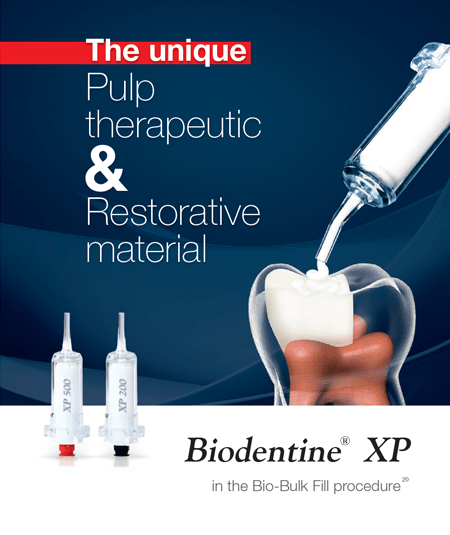
    • Biodentine® XP can be used in Bio-Bulk Fill** for one-step cavity filling from pulp to crown***, offering a time-saving and cost-effective solution****.
    • Biodentine® XP reaches a compressive strength similar to sound dentine, providing resistance to occlusal forces.
    • Biodentine® XP uses a resin-free formulation, ensuring a long-lasting dimensional stability with no shrinkage and the creation of a tight seal.
    • Biodentine® XP creates favorable conditions for maintaining pulp vitality when covered with a dental composite or an indirect restoration, with a final restoration in one or two sessions.
    • Biodentine® XP creates an alkaline pH environment unfavorable to bacterial growth.
    • Biodentine® XP is formulated without bismuth oxide, reducing the risk of tooth discoloration.

    *** Fill the entire cavity with only Biodentine® XP from the pulp to the tooth surface. Final enamel restoration to be performed in the same session or in the second session, which can be performed between 2 weeks and 6 months later.

    **** Compared to a sandwich technique

  • Ordering information

    • Item #01C0700 – Biodentine XP Starter Pack – 1 Box of 10 XP 200 Cartridges, 1 Biodentine XP Applicator Gun, 1 Box of 10 XP 500 Cartridges, 1 XP Applicator Gun, 1 XP Mixer 
    • Item #01C0710 – Biodentine XP 200 – Box of 10 cartridges 
    • Item #01C0720 – Biodentine XP 500 – Box of 10 cartridges 
    • Item #01C0725 – Biodentine XP Mixer – Box of 1 
    • Item #01C0730 – Biodentine XP Applicator Gun – Box of 1 
  • Documentation

Biodentine® XP: Instructions for use1

Learn more about Biodentine® XP 

Key figures about this product

1500+ publications

Including clinical, preclinical and in vitro studies on Biodentine®, showing scientific evidence of Biodentine®’s effectiveness2

1 Material

From pulp to crown with the Bio-Bulk Fill procedure**

2 volumes

Choose between XP 200 and XP 500 for the volume that best fits your procedure

You may wonder

  • Biodentine® XP vs traditional materials: How does it compare?

    Biodentine® is a unique combination of pulp therapeutic and restorative properties in one material, ideal for daily deep cavities restorations with the Bio-Bulk Fill procedures. Some of the materials commonly used for similar indications include:

    • Mineral trioxide aggregate (MTA) is another biomaterial that is often used for pulp capping and perforation repairs. Although it displays good biocompatibility and sealing, it does not have the same purity as Biodentine® 3. Further, it has a much longer setting time of up to four hours, is more difficult to handle, and may result in tooth discoloration, as reported in clinical use3.
    • Calcium hydroxide was traditionally the material of choice for pulp capping. Although it is biocompatible and promotes dentine bridge formation, calcium hydroxide is vulnerable to dissolving and has limited mechanical strength, which can affect sealing4 and long term stability, which limit its use for permanent restorations.
    • Glass ionomer cement (GIC) is often used for restorations and repairs. It offers good adhesion and resistance to leakage, and also releases fluoride for protection against caries. However, certain limitations may affect its clinical performance. Its relatively low compressive strength and hardness limit its use to lower-stress areas5. Additionally, the long-term sealing ability of GIC may be less predictable in some clinical scenarios. Unlike some bioactive materials, GIC does not actively promote pulp healing or dentine formation. Comparative studies have shown that alternative materials such as Biodentine® may induce superior remineralization of caries-affected dentine6 and promote a favorable environment for angiogenesis and osteogenesis, thus stimulating the healing process7.

    In conclusion, while there are a number of restorative materials on the market, numerous clinical and preclinical studies have reported favorable outcomes with Biodentine® in terms of handling, setting, sealing8, biocompatibility9, and bioactivity7, 10.

  • Can Biodentine® XP be used for all types of restorations?

    Biodentine® is a dentine substitute with multiple clinical applications.

    In the crown, it can be used for temporary dentine-enamel restoration for up to 6 months, restoration of deep and/or large coronal carious lesions, restoration of cervical or radicular lesions, pulp capping (direct and indirect), and pulpotomy for diagnosed symptoms of reversible or irreversible pulpitis.

    Biodentine®’s unique combination of therapeutic and restorative properties makes it optimal for filling the tooth from pulp to crown using the Bio Bulk-Fill procedure. As only one material is used, it’s not necessary to use layering and light curing. The final enamel restoration can be placed in the same session, offering greater time-efficiency for practitioners, and fewer visits and less chair time for patients.

  • What is the shelf life of Biodentine® XP cartridges?

    Biodentine® XP cartridges have a shelf life of 24 months from the date of manufacture when storage recommendations are followed. To ensure product longevity:

    • Keep cartridges in their original packaging until ready for use.
    • Store cartridges at 5°C-25°C in a dry environment. 
    • Avoid exposure to high temperatures, moisture, and direct sunlight.

    Discard any Biodentine® XP cartridges that have exceeded the expiry date on the packaging.

  • Is Biodentine® XP suitable for pediatric patients?

    Yes. Biodentine® XP is a suitable dental material for primary (children 2+) and permanent teeth in accordance with its IFU. Biodentine® XP is favored in vital pulp therapy in young patients due to its excellent safety profile, biocompatibility, and bioactivity*****. Biodentine® XP’s benefits include:

    • Preserving pulp vitality in deep caries or accidental pulp exposure.
    • Promoting dentine bridge formation to protect the natural tooth structure.
    • Supporting continued root development in immature permanent teeth by maintaining the health of the radicular pulp.

    Biodentine® XP can be used in pediatric dentistry as a bulk-filling material. Using the Bio-Bulk Fill procedure*, the final restoration can be placed in the same visit.

    ***** Properties verified by preclinical studies.

  • How long do I need to mix the cartridge? 

    It takes just 30 seconds to mix the Biodentine® XP cartridge to the required consistency using the high-speed Biodentine® XP Mixer.

  • How do I apply Biodentine XP?

    Biodentine® XP is applied directly into the tooth using the Biodentine® XP Dispenser Gun. Once mixed, slot the Biodentine® XP cartridge into the gun and bend the flexible nozzle to the suitable angle for accessing the tooth. Then simply place the nozzle into the cavity and squeeze the handle of the gun for direct application into the tooth for crown indications. Alternatively, you may apply Biodentine® XP with an amalgam carrier, a spatula, or a Root Canal Messing Gun. If necessary, the material can be manipulated and shaped using hand instruments during its working time of approximately six minutes.

  • Can I use Biodentine XP 200 or 500 on my current amalgamator/mixer?

    No, to ensure the best consistency, Biodentine XP 200/500 has to be mixed with our tailor-made mixer extruded with the Biodentine® Gun. Otherwise, its technical specifications are not guaranteed. The patented, high-speed mixer is tailor-made for Biodentine® XP cartridges, designed to mix the cartridge and provide the required consistency in 30 seconds.

  • What is Biodentine® XP composed of?

    The Biodentine® XP powder component is composed of:

    • Tricalcium silicate, the main ingredient that initiates the setting reaction, releases calcium ions, and stimulates dentine repair.
    • Calcium carbonate and calcium oxide filler.
    • Zirconium oxide for radiopacity.
    • Iron oxide for its characteristic color.

    The Biodentine® XP liquid component is composed of:

    • Calcium chloride
    • Purified water

    Both the powder and liquid components are included in the Biodentine® XP capsule and are ready to mix.

product-faqs

What your peers think

1 review

Sort by:

Leave a review
  • Rob Malek

    15 June 2024

    An outstanding system that simplifies material delivery for use in primary tooth pulpotomies. The success rate of Biodentine for this purpose is well documented.

*CE for Biodentine® XP was obtained on the basis of equivalence with Biodentine®. **Procedure extracted from international dental practitioners experts board (Position statement. September 2023). ***Fill the entire cavity with only Biodentine® XP from the pulp to the tooth surface. Final enamel restoration to be performed in the same session on in the second session, which can be performed between 2 weeks and 6 months later. ****Compared to a sandwich technique *****Properties verified by preclinical studies. 1See instructions for use for more information 2Publications available at https://pubmed.ncbi.nlm.nih.gov/ 3Parirokh, Masoud et al. Mineral Trioxide Aggregate: A Comprehensive Literature Review—Part III: Clinical Applications, Drawbacks, and Mechanism of Action. JOE. 2010, Volume 36(3): 400 – 413. 4. N, Revathi., and Sharath Chandra S.M. Merits and Demerits of Calcium Hydroxide as a Therapeutic Agent: A Review. International Journal of Dental Sciences and Research 2.6B (2014): 1-4. 5Lohbauer U. Dental Glass Ionomer Cements as Permanent Filling Materials? —Properties, Limitations Future Trends. Materials (Basel). 2009 Dec 28;3(1):76–96. 6Kuru E, Eronat N, Türkün M, Çoğulu D. Comparison of remineralization ability of tricalcium silicate and of glass ionomer cement on residual dentin: an in vitro study. BMC Oral Health. 2024 Jun 26;24(1):732. 7About I, ed. Biodentine® Properties and Clinical Applications. Springer. 2022. 8Niranjan et al. A comparative microleakage evaluation of three different base materials in Class I cavity in deciduous molars in sandwich technique using dye penetration and dentin surface interface by scanning electron microscope. Journal of Indian Society of Pedodontics and Preventive Dentistry. 2016.   9Poggio C et al. In vitro cytotoxicity evaluation of different pulp capping materials: a comparative study. Archives of Industrial Hygiene and Toxicology. 2015 10Bakhtiar H et al. Human Pulp Responses to Partial Pulpotomy Treatment with TheraCal as Compared with Biodentine and ProRoot MTA: A Clinical Trial. JOE. 2017.

You may also need

Register for free
1/4 Choose your login information

Your password must contain at least:

8 characters

A number and a letter

A special character

2/4 Enter your personal information
4/4 Confirm

Register for free

Sign up now and get an exclusive access to:
  • Live webinars and webinar replays to learn from the best speakers in dentistry.
  • Educational content in a variety of formats (articles, podcasts, clinical cases, videos, and more) to enhance your skills and achieve business success.
  • Our Voice of Customer program to contribute in creating innovative products that address your needs.
Create an account
Sign up now Already a member? Log-in!
Forgot your password?

Enter your email address below.

We will send you a password reset link by email.


Cancel
Fill out the form for a free Biodentine® XP demo
Subscribe to our Newsletter